


Flight Routes from the USA to India in 2026
Contents
- 1 Flight Routes from the USA to India in 2026
- 2 Let’s Be Real for a Second
- 3 How US-India Flights Are Actually Routed
- 4 How Airlines Actually Avoid Dangerous Airspace
- 5 Practical Tips for Booking Your Flight
- 6 Questions Everyone’s Asking
- 6.1 Is it safe to fly to India right now?
- 6.2 Will my flight get cancelled?
- 6.3 Are direct flights safer than connecting flights?
- 6.4 Why are flights from the USA to India taking longer now?
- 6.5 Are flights from the USA to India flying over the Middle East?
- 6.6 What are the safest flight routes from the USA to India?
- 6.7 Which airlines fly nonstop from the USA to India?
- 6.8 Should I avoid Gulf airlines when flying to India?
- 6.9 What is the fastest route from the USA to India?
- 6.10 How can I check my flight route before booking?
- 6.11 Are connecting flights through Europe safer than Gulf connections?
- 6.12 Can airlines change routes after a flight is scheduled?
- 7 One Last Thing
How Airlines Are Rerouting to Avoid Conflict Zones (And What It Means for Your Trip)
Travel & Aviation Safety Disclaimer
The information provided in this article is intended for general informational purposes only. Aviation routes, airline operations, and international airspace conditions can change rapidly due to geopolitical developments, government advisories, weather conditions, or airline operational decisions.
While we make every effort to keep this information accurate and up to date, flight routes, layovers, and airline policies may change without notice. Travelers should always verify the latest updates directly with their airline, airport authorities, or official aviation advisories before booking or traveling.
Desmo Travel does not control airline routing decisions, international airspace restrictions, or government travel advisories. The routes and examples mentioned in this guide are based on publicly available aviation data and typical airline operations as of March 2026.
Travelers are encouraged to check official sources such as:
-
Airline websites and travel alerts
-
Government aviation advisories
-
Airport departure information
-
Official international aviation notices (NOTAMs)
Desmo Travel is not responsible for flight delays, cancellations, rerouting, schedule changes, or any travel disruptions that may occur due to airline or aviation authority decisions.
If you need assistance selecting flights or understanding route options, our travel specialists are available to help you review the latest airline schedules and booking options.
Important:Aviation conditions change rapidly due to geopolitical events. Airlines continuously monitor global airspace and adjust routes based on official aviation advisories. This guide reflects conditions as of March 2026 – always verify current status before booking.
Let’s Be Real for a Second
If you’re reading this, you’ve probably got a trip to India coming up. Maybe you’re visiting family. Maybe it’s been two years since you saw your parents and you finally scraped together enough PTO. Or maybe you’re just trying to get home after finishing grad school.
And now you’re staring at flight options wondering: Is it safe? Should I be worried about all this news about Middle East airspace? Are the flights going to get cancelled?
I get it. I’ve been there. My cousin was supposed to fly Mumbai to Chicago last month and her flight got rerouted twice. She ended up spending six extra hours in Frankfurt eating overpriced pretzels. Not ideal, but she got home safe.
Here’s the thing though – commercial aviation doesn’t mess around with safety. Airlines have entire teams whose only job is to monitor airspace risks and reroute flights when needed. They’re not taking chances with your life.
That said, it helps to know what you’re getting into. So let’s talk about what’s actually happening with US-India routes in 2026 and which paths airlines are using to avoid the messy parts of the world.
Need Help Booking Your Flight?
Our team at Desmo Travel monitors route changes daily. We can help you find the best options for your specific dates and cities.Call us: +1 (888) 993-3766
How US-India Flights Are Actually Routed
Most people don’t think about this, but there are basically three main ways to get from the US to India. Each has its own pros, cons, and current situation.
Route 1: The Polar Route (Over the Arctic)
This is the one that goes straight north. New York to Delhi, you fly up over Greenland, skim the Arctic Circle, come down through Central Asia, and boom – you’re in India.
Air India and United use this for their nonstop flights. It’s actually the shortest distance-wise, which is why it works for nonstops. About 14-16 hours depending on winds.
The upside? You’re nowhere near the Middle East. You’re flying over ice, not conflict zones.
The downside? If something goes wrong and you need to divert, your options are limited. There aren’t exactly a ton of airports in northern Greenland. But modern aircraft are built for this, and pilots train for it extensively.
Route 2: Through Europe

This is the most common alternative right now. You fly from the US to a European hub – London, Frankfurt, Paris, Amsterdam – then connect to India from there.
Lufthansa, British Airways, Air France, KLM – they’re all running this route and have actually added capacity recently because so many people are avoiding Gulf hubs.
Travel time? Usually 18-22 hours total with the connection. A bit longer, but European airports are efficient and you know what you’re getting.
Top layover hubs: Singapore Changi, London Heathrow, and Bangkok Suvarnabhumi
Route 3: The Southeast Asia Route (Via Singapore or Bangkok)
Now this is the one you asked about, and honestly? It’s a solid option that a lot of people don’t even know exists.
Here’s how it works: You fly from the US West Coast to Singapore or Bangkok (about 16-18 hours), then connect to India from there (another 4-5 hours). Total time is around 22-26 hours with layovers.
Singapore Airlines runs this route from San Francisco, Los Angeles, and Seattle. They connect through Changi Airport – which, if you haven’t been, is basically the world’s nicest shopping mall that happens to have airplanes.
Bangkok is another option. Thai Airways and some Indian carriers run connections through Suvarnabhumi Airport. It’s not as fancy as Changi but it’s perfectly fine for a layover.
Is it safe? Yes. Singapore and Thailand are stable countries with excellent aviation safety records. Singapore Airlines is consistently ranked among the top 10 safest airlines globally. You’re not dealing with any geopolitical tensions on this route.
The tradeoff is time and money. It’s a longer journey, and usually more expensive because of the extra distance. But if you want to completely avoid the Middle East and don’t mind the extra hours? This is your route.
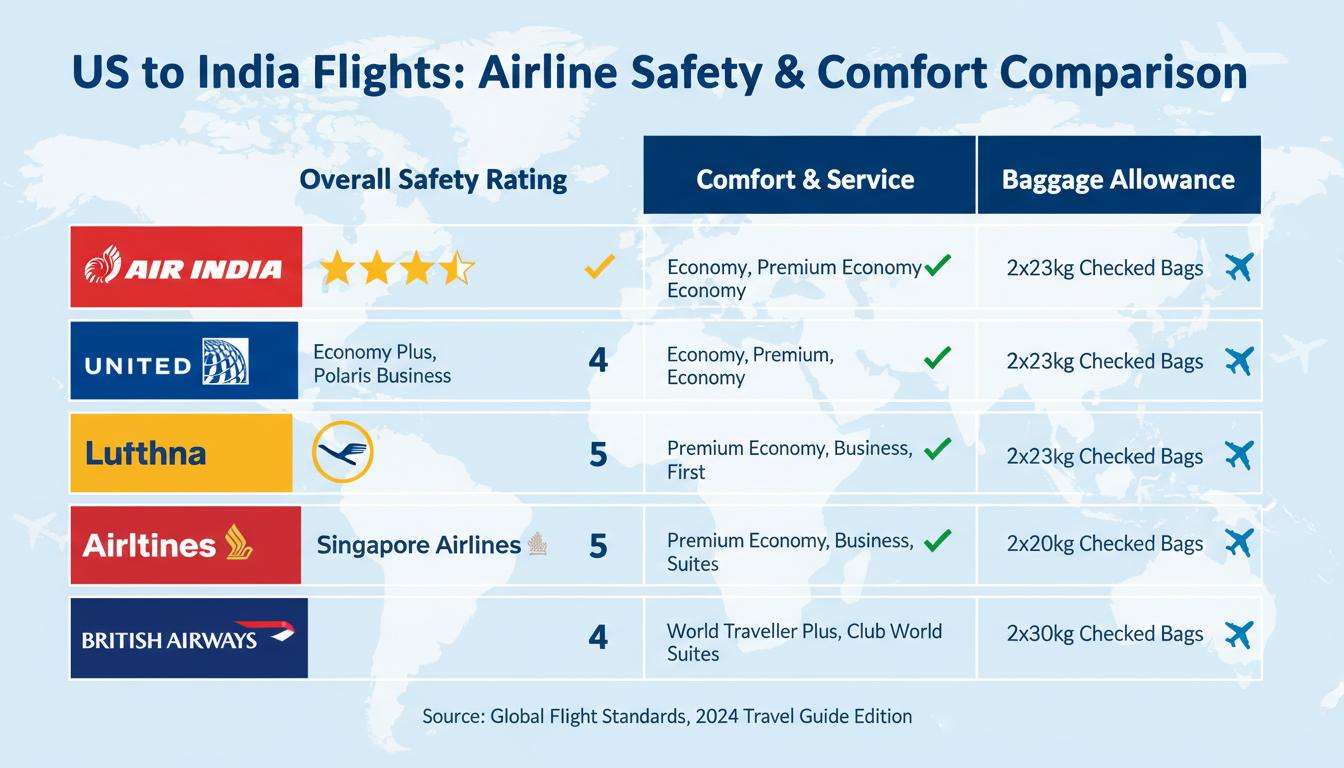
Airline safety ratings and service comparison for US-India routes
How Airlines Actually Avoid Dangerous Airspace
I think a lot of people’s anxiety comes from not knowing how this stuff works behind the scenes. So let me break it down.
Airlines don’t just wing it (pun intended). They have multiple layers of safety monitoring:
- FAA Advisories – The US aviation authority issues notices when airspace becomes risky. Airlines MUST follow these.
- ICAO Guidelines – The international aviation organization coordinates global safety standards.
- NOTAMs – Notice to Air Missions. These are real-time alerts about airspace restrictions, military activity, or other hazards.
- Airline Operations Centers – Major carriers have 24/7 teams monitoring global conditions and rerouting flights as needed.
When tensions spike somewhere – like what’s been happening in the Middle East – airlines get advance warning. They’re not flying into active conflict zones and then figuring it out. They know before the plane even leaves the gate.
In fact, most US and European carriers had already stopped flying over Iranian and Iraqi airspace before the recent escalations. They saw it coming and adjusted.
Practical Tips for Booking Your Flight
Alright, so what should you actually do when booking? Here are some things I’ve learned from years of booking these routes:
Check the Route Before You Book
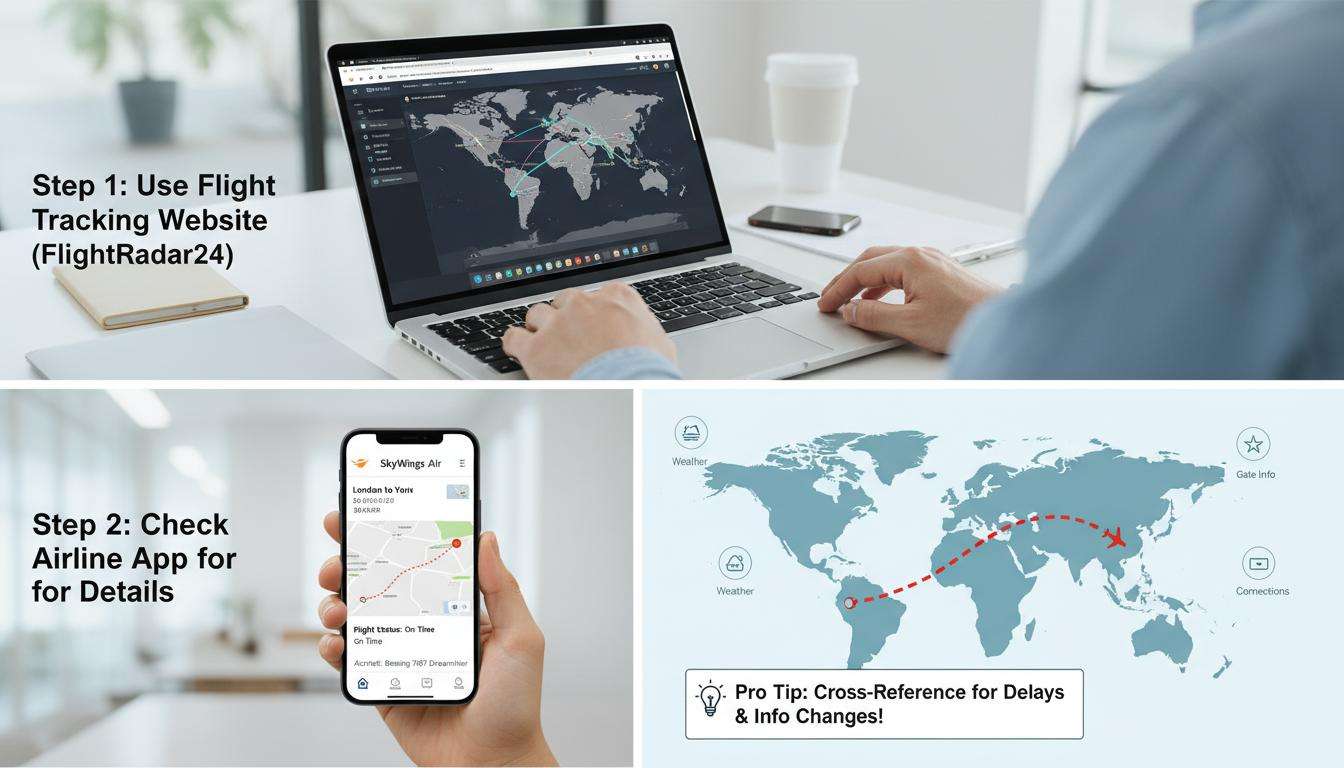
Most booking sites don’t show you the actual flight path, but you can check it yourself. After you find a flight you like, go to FlightRadar24 or FlightAware and search for that flight number. You’ll see the typical route it takes.
Use FlightRadar24 and airline apps to verify your flight path before booking
Consider Nonstops When Possible
Fewer takeoffs and landings means fewer opportunities for something to go wrong. Plus, no connection stress. Air India and United both run nonstops from Newark, Chicago, and San Francisco to Delhi and Mumbai.
Have a Backup Plan
If you’re booking through a Gulf hub right now, just know there’s a higher chance of disruptions. It might be fine, but it might not. European or Southeast Asian connections are more stable at the moment.
Book with Airlines That Have Good Rebooking Policies
When disruptions happen, you want an airline that’ll actually help you, not leave you on hold for three hours. In my experience, Singapore Airlines, Lufthansa, and United have been pretty decent about rebooking during crises.
Not Sure Which Route is Right for You?
Every traveler’s situation is different. Family emergencies, tight schedules, budget constraints – we get it. Talk to us and we’ll help you figure out the best option.Call Desmo Travel: +1 (888) 993-3766
Questions Everyone’s Asking
Is it safe to fly to India right now?
Commercial aviation remains one of the safest forms of travel. Airlines constantly monitor global airspace conditions and avoid areas considered unsafe. Many airlines flying between the USA and India adjust routes to avoid sensitive airspace and follow guidance from international aviation authorities. Millions of travelers continue flying between the United States and India every month without incident.
Will my flight get cancelled?
Most flights continue operating normally. If you’re flying through European or Southeast Asian hubs, cancellation risk is generally low. Flights that connect through Dubai, Doha, or Abu Dhabi may occasionally face disruptions depending on changing airspace conditions. Travelers should monitor airline notifications and check flight status regularly before departure.
Are direct flights safer than connecting flights?
From a statistical perspective, direct flights have fewer takeoffs and landings, which slightly reduces overall operational risk. However, connecting flights through major international hubs remain extremely safe. The difference in safety is minimal, and both options follow strict international aviation safety standards.
Why are flights from the USA to India taking longer now?
Flights may take longer when airlines avoid certain airspace regions. Instead of flying the shortest path, airlines sometimes reroute aircraft around sensitive areas. This increases flight distance, which can add additional time and fuel usage. A route that previously took 14 hours may now take 16–17 hours depending on the path chosen.
Are flights from the USA to India flying over the Middle East?
Some flights still pass through parts of Middle Eastern airspace depending on the airline and route. However, airlines may adjust routes to avoid specific regions if aviation authorities issue advisories. Alternative routes through Europe, the Arctic (polar routes), or Southeast Asia are commonly used when necessary.
What are the safest flight routes from the USA to India?
Airlines currently use three primary corridors when flying between the USA and India:
Polar Route
Flights travel over Greenland and the Arctic before descending through Central Asia into India.
European Route
Flights connect through major European hubs such as London, Frankfurt, Paris, or Amsterdam.
Southeast Asia Route
Flights travel through hubs such as Singapore or Bangkok before continuing to India.
Each route is selected based on airline scheduling and aviation advisories.
Which airlines fly nonstop from the USA to India?
Several airlines operate nonstop flights between the United States and India, including:
-
Air India
-
United Airlines
Popular nonstop routes include:
-
Newark to Delhi
-
Chicago to Delhi
-
San Francisco to Delhi
These flights typically use polar flight corridors.
Should I avoid Gulf airlines when flying to India?
Not necessarily. Gulf carriers such as Emirates, Qatar Airways, and Etihad Airways maintain excellent safety records and are among the world’s top airlines. Route adjustments depend on airspace conditions rather than airline safety. Many travelers still use Gulf hubs successfully for USA–India travel.
What is the fastest route from the USA to India?
The fastest routes are usually nonstop flights using polar flight corridors, such as Newark to Delhi or Chicago to Delhi. These flights generally take around 14–16 hours, depending on weather and wind conditions.
How can I check my flight route before booking?
Travelers can review typical flight paths using aviation tracking platforms such as:
-
FlightRadar24
-
FlightAware
-
Airline route maps
These tools allow you to see historical flight paths used by specific flights.
Are connecting flights through Europe safer than Gulf connections?
Both routes are considered safe under international aviation regulations. However, some travelers prefer European connections because they avoid certain Middle Eastern airspaces depending on current geopolitical developments.
Can airlines change routes after a flight is scheduled?
Yes. Airlines regularly adjust flight paths even after departure if aviation authorities issue new advisories or airspace restrictions. Airline operations centers continuously monitor global conditions and coordinate with air traffic authorities to ensure passenger safety.
One Last Thing
I need to say this clearly: aviation conditions change fast. What’s true today might not be true next week. Airlines adjust routes constantly based on real-time conditions.
This article reflects what I know as of March 2026. Before you book, double-check current conditions. Check the FAA website. Check your airline’s travel advisories. Use your judgment.
And if you want someone to help you navigate all this? That’s literally what we do at Desmo Travel. We’re not some faceless booking site. We’re real people who understand that this trip matters – whether it’s for a wedding, a funeral, or just finally meeting your new niece.
Ready to book your flight to India?
Call Desmo Travel:+1 (888) 993-3766
Or visit desmotravel.com to chat with our team
About Desmo Travel
Desmo Travel has been helping travelers navigate complex international routes for over 20 years. We specialize in US-India travel and stay on top of route changes, visa requirements, and safety updates so you don’t have to. When you call us, you talk to a real person who understands what’s at stake.