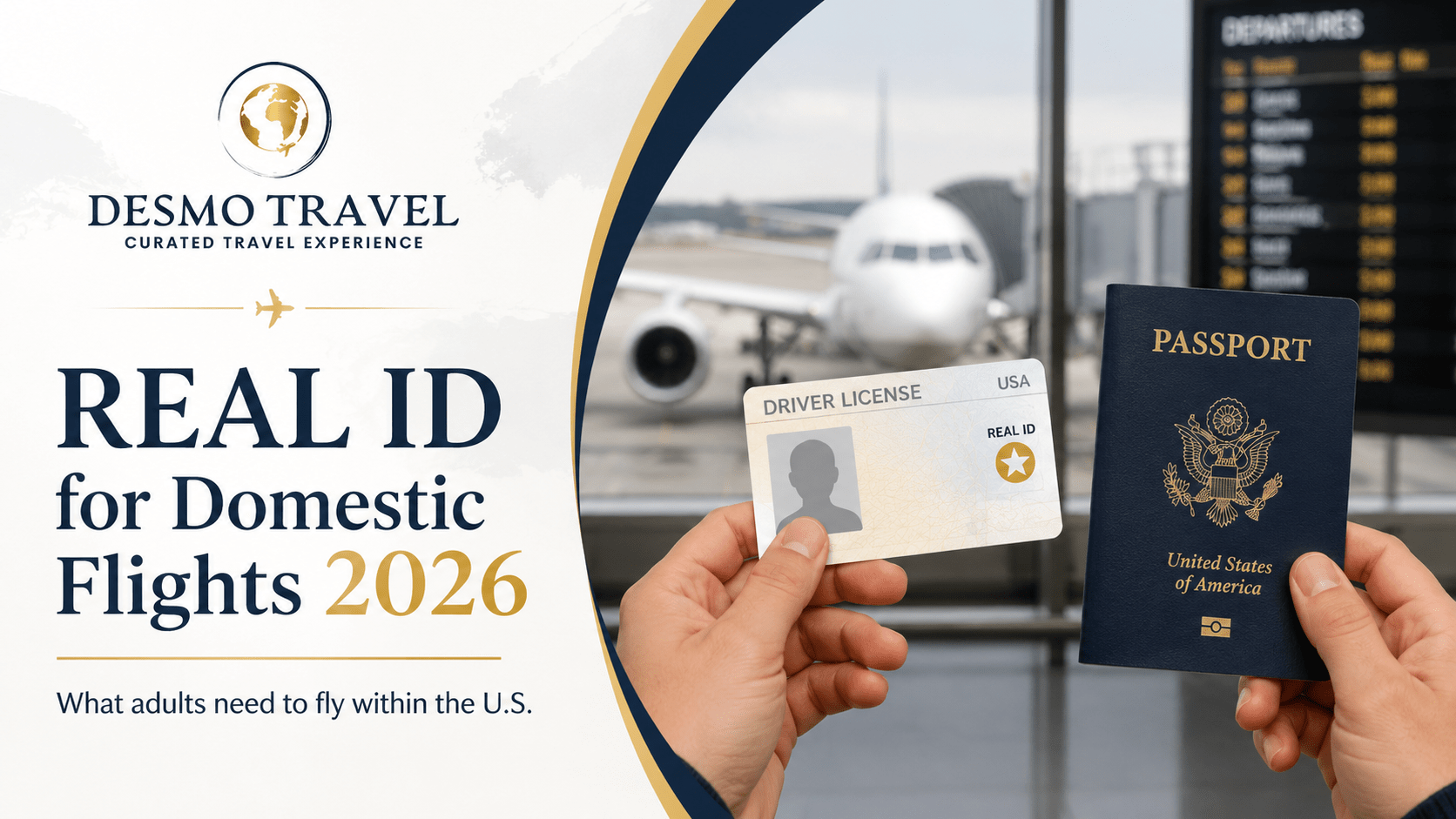



International Flight Booking Checklist for 2026
Author/reviewer: Desmo Travel editorial team; review by a Desmo international airfare advisor before publication.
Last updated: July 10, 2026
Direct answer: Before booking an international flight in 2026, verify passport validity, visa or electronic authorization rules, exact passenger names, baggage allowances, connection requirements, change and refund terms, and travel insurance coverage. Compare the operating airline—not only the seller—and save every confirmation. A travel advisor can help check complex routes before payment.
International trips are harder to correct after ticketing than domestic trips. Use this answer-first checklist before you pay, especially for multi-airline itineraries, family travel, or journeys with long connections.
Last fact-checked: July 11, 2026
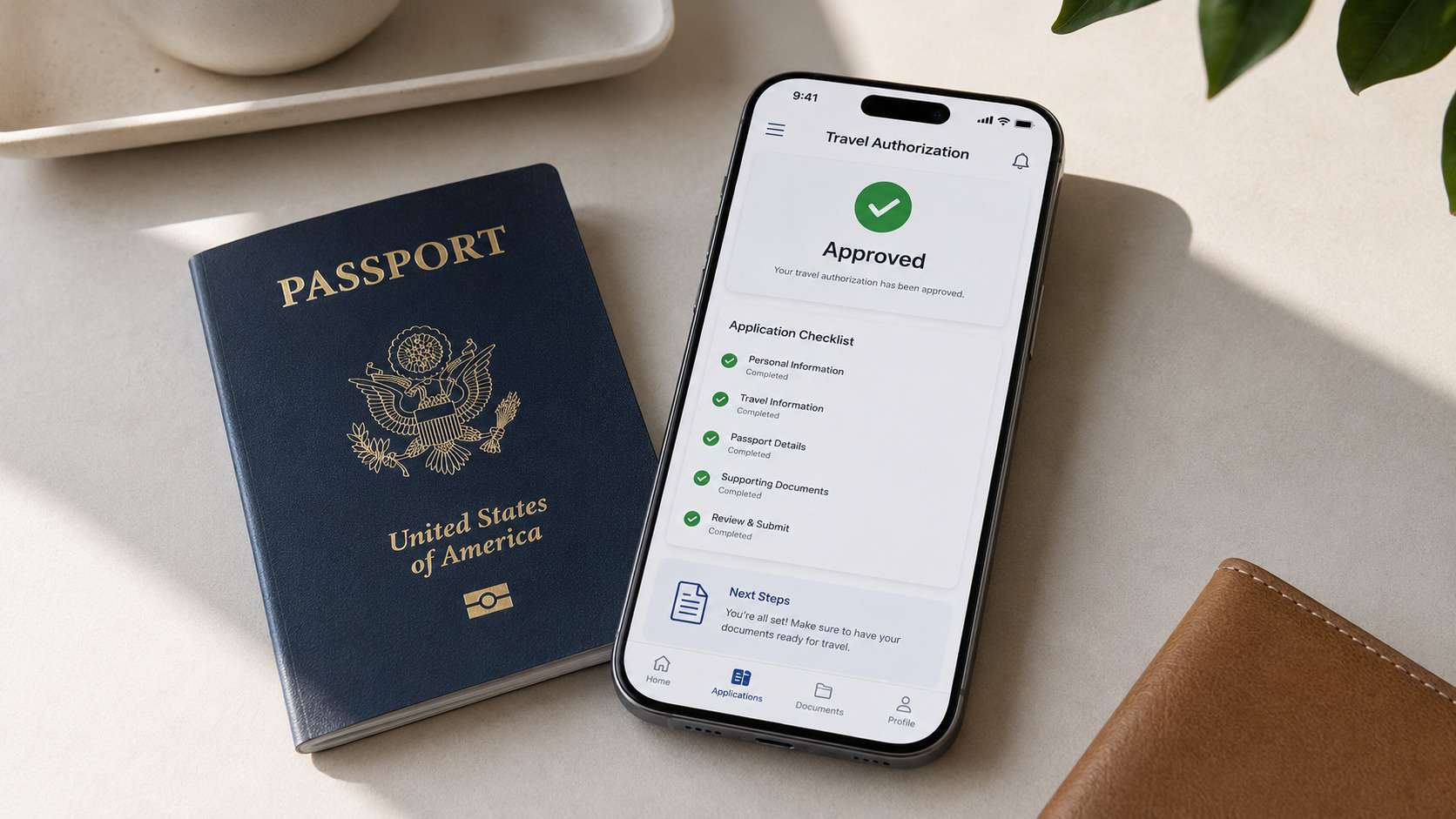
Why travelers can trust this international flight booking checklist
This guide combines official U.S. government requirements with practical checks used when reviewing international itineraries. Desmo’s airfare team checks the full routing—not only the advertised price—including operating carriers, airport changes, baggage conditions, connection time, and fare restrictions.
“The lowest displayed fare is not always the lowest-risk itinerary. Before ticketing, travelers should compare the operating airline, connection airports, baggage rules, and change conditions together.” — Desmo Travel Airfare Desk
Experience note: A frequent preventable problem is booking a low fare before checking whether the trip changes airports, requires baggage re-checking, or uses different operating carriers. This checklist is designed to surface those issues before payment.
1. Confirm the passport will be valid long enough
Check every traveler’s passport before comparing fares. The U.S. Department of State says some destinations require at least six months of validity beyond the travel dates, and some airlines may deny boarding when that requirement is not met. Children’s U.S. passports are valid for five years, so never assume a child’s document expires with an adult’s.
Primary source: U.S. Department of State passport guidance.
Entry rules depend on nationality, destination, trip purpose, and sometimes the airport used for a connection. Review the destination’s official embassy or immigration website and the State Department destination page. A transit stop can create a separate document requirement even when you do not leave the airport.
Primary source: U.S. Department of State International Travel Checklist.
3. Match every ticket name to the travel document
Enter the passenger name exactly as shown on the passport. Do not rely on the 24-hour rule to fix spelling: the U.S. Department of Transportation states that airlines are not required to make ticket changes, including name corrections, free of charge. Review names, dates, airports, and birth dates before payment.
4. Identify both the marketing and operating airline
A codeshare ticket may display one airline while another operates the aircraft. The operating airline often controls check-in, seat selection, aircraft type, onboard service, and day-of-travel handling. Record both carrier names for every segment.
Primary source: U.S. DOT: Buying a Ticket.
5. Compare the total trip cost, not only the headline fare
| Cost item | What to verify | Why it matters |
|---|---|---|
| Checked baggage | Pieces, weight, dimensions, and each segment’s carrier | Rules can differ on partner-operated flights |
| Seat selection | Included, paid, or unavailable until check-in | Families may not be seated together automatically |
| Changes | Fee plus fare difference | A “no change fee” ticket may still cost more to rebook |
| Refunds | Original payment, credit, or nonrefundable | Cancellation and airline disruption rules differ |
| Connections | Airport transfer, overnight hotel, or transit visa | A cheap itinerary may add material time and cost |
6. Read baggage rules for the complete itinerary
Check cabin and checked baggage limits on the operating carrier’s official site. For multi-carrier trips, ask which airline’s allowance applies and whether bags are checked through to the final destination. Save a screenshot or PDF of the rule displayed when you book.
7. Assess connection time and airport changes
Confirm whether the connection stays in one terminal and one airport. Allow time for immigration, security screening, baggage collection, and re-checking when required. Travelers with children, reduced mobility, or unfamiliar airports should build in additional margin.
8. Understand the U.S. 24-hour reservation rule
For airline tickets purchased at least seven days before departure, airlines must offer either a 24-hour hold or a 24-hour cancellation with a full refund. Airlines do not have to offer both options. The DOT also notes that this federal requirement does not apply to tickets bought through travel agents or online travel agencies, though an agent may offer its own policy.
Primary source: U.S. DOT refund guidance.
9. Review disruption and refund rights
When an airline cancels a flight or makes a qualifying significant change and the traveler chooses not to accept alternatives, the DOT says the consumer is entitled to a refund. Keep the ticket receipt, airline notices, and written records of any options offered.
10. Consider travel medical and trip protection
The State Department warns that the U.S. government does not pay medical bills or unexpected travel costs abroad and that U.S. health coverage often does not cover overseas care. Compare medical, evacuation, cancellation, interruption, delay, and baggage benefits, plus exclusions.
Explore Desmo Travel insurance options and read the policy documents before purchase.
11. Save documents in more than one place
Keep confirmations, receipts, insurance details, and emergency contacts offline and in secure cloud storage. The State Department recommends making multiple copies of required travel documents and keeping copies separate from the originals.
12. Ask for a final itinerary review before payment
Complex routes deserve a second check. Desmo Travel can help compare schedules, operating carriers, baggage rules, connection quality, and fare conditions. Review international flight services, learn about Desmo Travel, or request a flight quote.
International flight booking checklist
Use this international flight booking checklist as a final pre-payment review for every traveler and every flight segment.
- Passport validity checked for every traveler
- Visa, ETA, and transit requirements verified with official sources
- Names match passports exactly
- Dates, airports, and operating airlines confirmed
- Baggage and seat costs included in the comparison
- Connection time and airport changes reviewed
- Change, cancellation, and refund terms saved
- Travel insurance options reviewed
- Receipts and confirmations stored securely
Frequently asked questions
How much passport validity do I need for an international trip?
Requirements vary by destination. Some countries require six months of validity beyond the travel dates. Check the destination’s official rules and the State Department guidance before booking.
Can I cancel any international flight within 24 hours?
Not always. The U.S. airline rule generally covers tickets purchased directly from an airline at least seven days before departure; the airline may provide either a free 24-hour hold or a 24-hour refund option.
Does a passport card work for international flights?
No. The State Department says the U.S. passport card is not valid for international air travel. U.S. citizens, including children, generally need a valid passport book for international flights.
The answer depends on the itinerary and applicable carrier rules. Check the ticket disclosure and the operating airlines’ official baggage pages, then obtain written confirmation if the itinerary uses multiple carriers.
Should I buy travel insurance before or after booking?
Review coverage as soon as you make the first trip payment because some benefits have time-sensitive eligibility rules. Compare exclusions, coverage limits, and the policy’s definition of covered reasons.
What should I send a travel advisor for a flight quote?
Provide legal passenger names, travel dates or flexibility, origin and destination airports, cabin preference, baggage needs, loyalty numbers, accessibility needs, and budget. Do not send passport scans unless a trusted provider specifically requires them through a secure method.
Related Desmo Travel resources
- Airline ticket and international flight services
- Passport and visa services
- Travel insurance options
- Request a personalized travel quote
- Desmo Travel frequently asked questions
- Contact Desmo Travel
Editorial standards and travel disclaimer
Travel rules, entry requirements, airline schedules, baggage allowances, fares, and refund policies can change without notice. This article provides general travel-planning information and is not legal, immigration, insurance, or financial advice. Always confirm current requirements with the operating airline, destination embassy or immigration authority, and the official government sources linked above before booking or departure.
Desmo Travel may assist with itinerary planning and reservations, but final admission decisions are made by airlines and government authorities. Insurance coverage is subject to the selected policy’s terms, limits, and exclusions.
Read Desmo Travel’s Disclaimer, Terms and Conditions, and Privacy Policy.
How this article was fact-checked
The editorial team reviewed guidance from the U.S. Department of State, U.S. Department of Transportation, and U.S. Customs and Border Protection, then organized it around the practical decisions travelers make before ticketing. Before publication, the named reviewer should verify every source link, airline-related statement, visible update date, and schema field.