

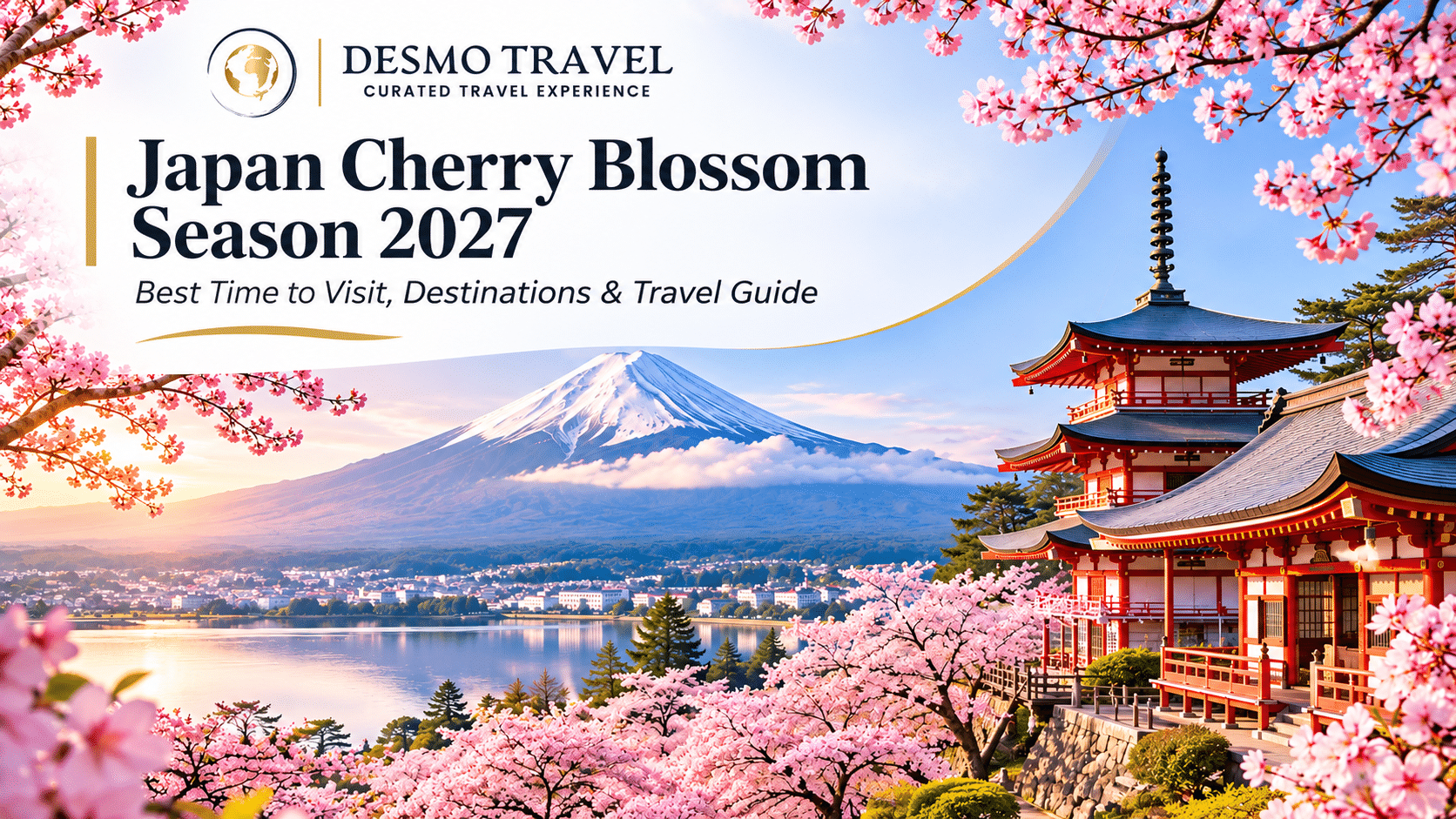
Japan Cherry Blossom Season 2027: Best Time to Visit, Destinations & Travel Guide
By Desmo Travel | Curated Travel Experience
Last Updated: November 25, 2026
Imagine walking beneath delicate pink cherry blossoms, exploring centuries-old Japanese temples and watching petals drift gently across peaceful rivers.
Every spring, Japan transforms into one of the world’s most enchanting travel destinations as cherry blossoms, known locally as sakura, begin to bloom.
From Tokyo’s beautiful parks and Kyoto’s historic streets to breathtaking views of Mount Fuji, Japan’s cherry blossom season offers an extraordinary combination of natural beauty, culture and memorable experiences.
For travelers planning a vacation in 2027, now is an excellent time to begin exploring spring travel options.
Cherry blossom season is one of Japan’s most sought-after travel periods, and planning ahead can help travelers compare accommodations, transportation and suitable itineraries.
At Desmo Travel, we help travelers explore personalized vacation arrangements designed around their interests, preferred dates and travel requirements.
When Is Japan Cherry Blossom Season 2027?
Quick Answer: Japan’s main cherry blossom season typically takes place from late March through early April in Tokyo, Kyoto and Osaka. Northern destinations such as Hirosaki and Hokkaido generally experience blossoms later, from mid-April into early May.
Exact flowering and full-bloom dates for 2027 remain uncertain and will depend on weather conditions and updated seasonal forecasts.
| Destination | Typical Cherry Blossom Viewing Period |
| Tokyo | Late March to early April |
| Kyoto | Late March to early April |
| Osaka | Late March to early April |
| Nara | Late March to early April |
| Hiroshima | Late March to early April |
| Mount Fuji area | Early to mid-April, depending on location |
| Hirosaki | Mid to late April, sometimes into May |
| Sapporo | Late April to early May |
These are approximate historical seasonal windows, not guaranteed bloom dates or confirmed 2027 forecasts.
Travelers should monitor updated flowering information as spring approaches.
What Makes Japan’s Cherry Blossom Season Special?
Cherry blossoms hold an important place in Japanese culture.
Their brief flowering period is often associated with the changing seasons, appreciation of beauty and the temporary nature of life’s experiences.
During spring, residents and visitors participate in hanami, the traditional practice of enjoying flowering cherry trees.
Hanami may involve walking through gardens, gathering with friends, taking photographs or enjoying a picnic in designated public spaces.
For international tourists, cherry blossom season provides an opportunity to experience Japan’s culture beyond its famous buildings and modern cities.
However, flowers do not bloom simultaneously throughout the country.
Japan stretches across several climate zones, allowing visitors to discover different stages of spring depending on their destination and travel dates.
Best Places to See Cherry Blossoms in Japan
1. Tokyo – Urban Spring Beauty
Tokyo is an excellent starting point for a Japan cherry blossom vacation.
The city combines modern architecture, historic gardens, shopping districts and seasonal natural beauty.
Some of its most popular cherry blossom locations include:
Shinjuku Gyoen National Garden: A spacious garden with different varieties of cherry trees, making it an attractive destination throughout several stages of spring.
Ueno Park: A lively public park where visitors can enjoy seasonal blossoms alongside museums and cultural attractions.
Chidorigafuchi: A picturesque moat area near the Imperial Palace, known for flowering cherry trees along its waterfront.
Meguro River: A popular destination for urban cherry blossom photography, particularly when seasonal illuminations are operating.
Tokyo’s public transportation network makes it possible to explore several neighborhoods during a single vacation.
However, famous blossom locations can become crowded, especially during weekends and the anticipated full-bloom period.
Consider early-morning visits and allow extra time for public transportation.
2. Kyoto – Experience Traditional Japan
Kyoto is famous for its historic temples, traditional neighborhoods and beautiful seasonal landscapes.
Cherry blossoms create an especially memorable atmosphere around many of the city’s cultural landmarks.
Popular viewing areas include:
- Philosopher’s Path
- Maruyama Park
- Arashiyama
- Kiyomizu-dera Temple
- Historic Higashiyama neighborhoods
The Philosopher’s Path offers a peaceful canal-side setting, although it can become very busy during spring.
Arashiyama combines mountain scenery, riverside walks and nearby attractions such as the bamboo grove.
Kyoto is also an excellent destination for travelers interested in tea culture, traditional architecture and Japanese gardens.
A stay of two or three nights allows visitors to explore without trying to cover every attraction in a single day.
3. Osaka – Food, Culture and Cherry Blossoms
Osaka offers a lively contrast to Kyoto’s traditional atmosphere.
The city is known for its food culture, entertainment districts and historic Osaka Castle.
Osaka Castle Park is a popular location for cherry blossom viewing, with spacious grounds and impressive architectural surroundings.
Travelers may also explore Dotonbori, local shopping streets and other attractions according to their interests.
Osaka can serve as a convenient base for regional excursions to Kyoto, Nara and Kobe.
Families visiting theme parks should check attraction admission requirements and reserve tickets where appropriate.
Theme park entry is not automatically included in sightseeing packages.
4. Mount Fuji and Lake Kawaguchi – Iconic Spring Scenery
Few images represent Japan as beautifully as cherry blossoms framing snow-covered Mount Fuji.
The Fuji Five Lakes region offers opportunities to enjoy mountain scenery, lakeside walks and spring landscapes.
Lake Kawaguchi and the area around Chureito Pagoda are particularly popular for photography.
However, flowering dates in this region may differ from Tokyo because of elevation and local temperatures.
Mount Fuji can also be obscured by clouds, fog or rain.
A planned excursion does not guarantee a visible mountain or blooming cherry trees.
Travelers who consider Mount Fuji an important highlight may prefer an overnight stay rather than depending entirely on a single short day trip.
5. Nara – Historic Temples and Natural Beauty
Nara is an attractive addition to a Kyoto or Osaka itinerary.
The city is known for its historic Buddhist temples, traditional parks and free-roaming deer in designated areas.
Spring introduces seasonal color to many of its public spaces.
Visitors can explore Nara Park, Todai-ji Temple and other cultural landmarks.
Travelers should follow local guidance when interacting with deer and avoid feeding them inappropriate food.
A day trip from Kyoto or Osaka may be suitable for many visitors, although an overnight stay offers a more relaxed experience.
6. Hiroshima and Miyajima – Culture and Coastal Scenery
Hiroshima offers meaningful historical attractions alongside beautiful gardens and seasonal landscapes.
Visitors can explore Hiroshima Peace Memorial Park, museums and other cultural destinations.
Nearby Miyajima is known for Itsukushima Shrine and its iconic waterfront setting.
During spring, cherry trees add another dimension to the island’s scenery.
Ferry operations, admission requirements and sightseeing schedules should be checked before departure.
7. Hirosaki – A Later Cherry Blossom Experience
Travelers unable to visit Japan during late March may consider the northern regions.
Hirosaki Park in Aomori Prefecture is particularly famous for its historic castle grounds and extensive cherry tree displays.
The northern location means blossoms generally arrive later than in Tokyo and Kyoto.
This makes Hirosaki an interesting alternative for travelers planning a vacation during the second half of April.
Festival schedules and illumination arrangements should be confirmed closer to the travel dates.
8. Hokkaido – Discover Japan’s Later Spring
Hokkaido provides another opportunity for visitors seeking later cherry blossom experiences.
Destinations such as Sapporo and Hakodate generally experience spring flowering after the main central Japanese cities.
Travelers may combine seasonal parks with regional cuisine and scenic excursions.
However, a northern Japan itinerary requires different transportation and accommodation arrangements from a classic Tokyo–Kyoto–Osaka tour.
Suggested 8-Day Japan Cherry Blossom Itinerary
The following itinerary is designed as an introduction to Japan’s main spring destinations.
| Day | Destination |
Suggested Experience
|
| 1 | Tokyo |
Arrival and hotel check-in
|
| 2 | Tokyo |
Gardens and cherry blossom sightseeing
|
| 3 | Tokyo |
Historic neighborhoods and seasonal parks
|
| 4 | Mount Fuji region |
Scenic excursion, weather permitting
|
| 5 | Kyoto |
Intercity transfer and cultural sightseeing
|
| 6 | Kyoto |
Temples, gardens and blossom locations
|
| 7 | Osaka or Nara |
Regional sightseeing
|
| 8 | Osaka |
Onward departure
|
Days 1–3: Discover Tokyo
Begin with a relatively relaxed arrival day before exploring the city’s major attractions.
Depending on the latest flowering reports, prioritize locations such as Ueno Park, Shinjuku Gyoen, Chidorigafuchi or Meguro River.
Include indoor attractions and alternative activities in case of rain or changes in flowering conditions.
Day 4: Explore the Mount Fuji Region
Enjoy a scenic excursion to selected viewpoints and lakeside locations.
The specific itinerary should depend on weather, road conditions and available transportation.
Travelers should be prepared for alternative sightseeing if Mount Fuji is not visible.
Days 5–6: Experience Kyoto
Continue to Kyoto using an appropriate train or other transportation arrangement.
Explore traditional neighborhoods, historic temples and seasonal gardens.
A flexible schedule is particularly valuable because blossom conditions can change over a short period.
Days 7–8: Discover Osaka or Nara
Choose between Osaka’s energetic urban atmosphere and Nara’s historic attractions.
Conclude the trip with an onward departure from the appropriate airport.
This itinerary is a sample only. International flight timing, intercity transportation, hotel availability and sightseeing arrangements may require additional days or changes.
How Long Does Cherry Blossom Season Last?
The full-bloom display of an individual group of cherry trees can be relatively brief.
Rain, wind and temperature changes can accelerate petal fall.
However, different cherry varieties and regional climates provide viewing opportunities across a much longer national season.
Travelers can improve their chances of experiencing blossoms by spending several days in Japan and maintaining some flexibility.
A tour scheduled for a specific date should never be advertised as guaranteeing full bloom.
Best Time to Book a Japan Cherry Blossom Vacation
Late March and early April are popular travel periods, particularly in Tokyo and Kyoto.
Booking several months in advance may help travelers compare a wider range of accommodation choices and flight options.
Nevertheless, booking early does not guarantee the lowest price or favorable flowering conditions.
Consider cancellation policies, hotel locations and transportation flexibility when arranging your trip.
Where practical, flexible or refundable reservations may help travelers adjust to updated seasonal forecasts.
Japan Cherry Blossom Tour Cost in 2027
The cost of a spring vacation depends on several factors:
- International airfare and departure city
- Travel dates and duration
- Hotel location and category
- Private or shared transportation
- Train tickets and local transfers
- Guided sightseeing
- Meals and optional experiences
- Seasonal demand and applicable taxes
Cherry blossom season can attract strong travel demand, particularly around major sightseeing destinations.
Travelers should compare the total journey cost rather than focusing exclusively on an advertised package price.
Desmo Travel does not guarantee a fixed cherry blossom vacation price through this article.
Request a customized quotation based on your preferred dates, destination choices and traveler requirements.
Planning a Japan Tour From the USA
Japan is accessible through international flight options from several major U.S. gateways.
Travelers may consider arriving in Tokyo and departing from Osaka, or using a round-trip itinerary if more suitable.
An itinerary arriving in one city and departing from another can sometimes reduce unnecessary return journeys.
U.S. citizens are generally eligible for visa-exempt short-term tourism under Japan’s applicable entry rules.
Indian passport holders living in the United States should not assume that the same visa exemption applies to them.
Japan’s Ministry of Foreign Affairs provides information about visa requirements and electronic visa options for eligible applicants.
Check current requirements based on nationality, residency, passport type and purpose of travel before making nonrefundable arrangements.
Practical Tips for Cherry Blossom Travelers
Spring temperatures can vary considerably throughout Japan.
Pack comfortable walking shoes, light layers, a compact umbrella and suitable clothing for cooler mornings.
Public gardens and parks may have specific rules regarding food, alcohol, tripods and designated picnic areas.
Respect local customs, avoid touching or damaging branches and dispose of rubbish appropriately.
Travelers with vegetarian or Jain dietary preferences should communicate their needs in advance. Some Japanese dishes may contain fish-based stock even when they appear vegetarian.
Families with senior travelers should also consider station accessibility, walking distances and luggage transportation.
Why Plan Your Japan Vacation With Desmo Travel?
Desmo Travel helps travelers explore customized vacation arrangements based on individual preferences.
Whether you are interested in a romantic spring getaway, a family vacation, a cultural tour or a multi-city Japan experience, our team can discuss suitable travel options.
Customers may enquire about flights, accommodation, transportation and sightseeing arrangements.
The final itinerary can be developed around the services available for your preferred travel dates.
Experience Japan’s extraordinary spring beauty with Desmo Travel.
Visit https://www.desmotravel.com/ to discuss your Japan travel plans.
Frequently Asked Questions
When will cherry blossoms bloom in Japan in 2027?
Tokyo, Kyoto and Osaka typically experience blossoms from late March to early April. Exact 2027 dates depend on weather and forthcoming forecasts.
Which city is best for cherry blossoms in Japan?
Tokyo and Kyoto are popular choices for first-time visitors. Mount Fuji, Hirosaki and other regions offer different seasonal experiences.
Is eight days enough for a Japan cherry blossom tour?
Eight days can accommodate a classic Tokyo–Kyoto–Osaka itinerary, depending on international flights and sightseeing preferences.
Can cherry blossoms be seen in late April?
Yes, northern destinations such as Hirosaki and parts of Hokkaido typically experience later flowering.
Can Desmo Travel guarantee full-bloom cherry blossoms?
No. Cherry blossom timing and conditions depend on natural factors outside the control of travel agencies and suppliers.
How much does a Japan cherry blossom tour cost?
Pricing depends on the travel dates, flight options, hotels, transportation and confirmed services. Customers can request an individualized quotation.
Final Thoughts
Japan’s cherry blossom season is a celebration of nature, culture and the beauty of spring.
Whether you are exploring Tokyo’s seasonal gardens, Kyoto’s traditional streets or mountain landscapes near Mount Fuji, a thoughtfully planned journey can create unforgettable memories.
Begin exploring your options early, remain flexible about flowering conditions and choose an itinerary that suits your preferred travel style.
Discover the magic of Japan with Desmo Travel — Curated Travel Experience.
Travel, Pricing and Cherry Blossom Disclaimer
This article is intended for general information and travel planning. It is not a fixed-price tour advertisement, binding quotation or confirmed booking.
All flowering periods are approximate seasonal estimates. Desmo Travel does not guarantee cherry blossoms, full bloom, snowfall, Mount Fuji visibility, favorable weather or festival operations.
Flight prices, hotels, train schedules, sightseeing arrangements, attraction tickets and other services remain subject to availability and supplier confirmation.
Any previous promotional or third-party price must be reconfirmed. No automatic entitlement to price matching or historical rates is created by this article.
Only services listed in the accepted written quotation and confirmed booking documents are included.
Visa approval, admission to Japan and other immigration decisions remain under the authority of the relevant government agencies.
Changes, cancellations, refunds and additional expenses are governed by individual booking conditions, supplier policies and applicable law.
Nothing in this disclaimer excludes consumer rights that cannot lawfully be excluded.