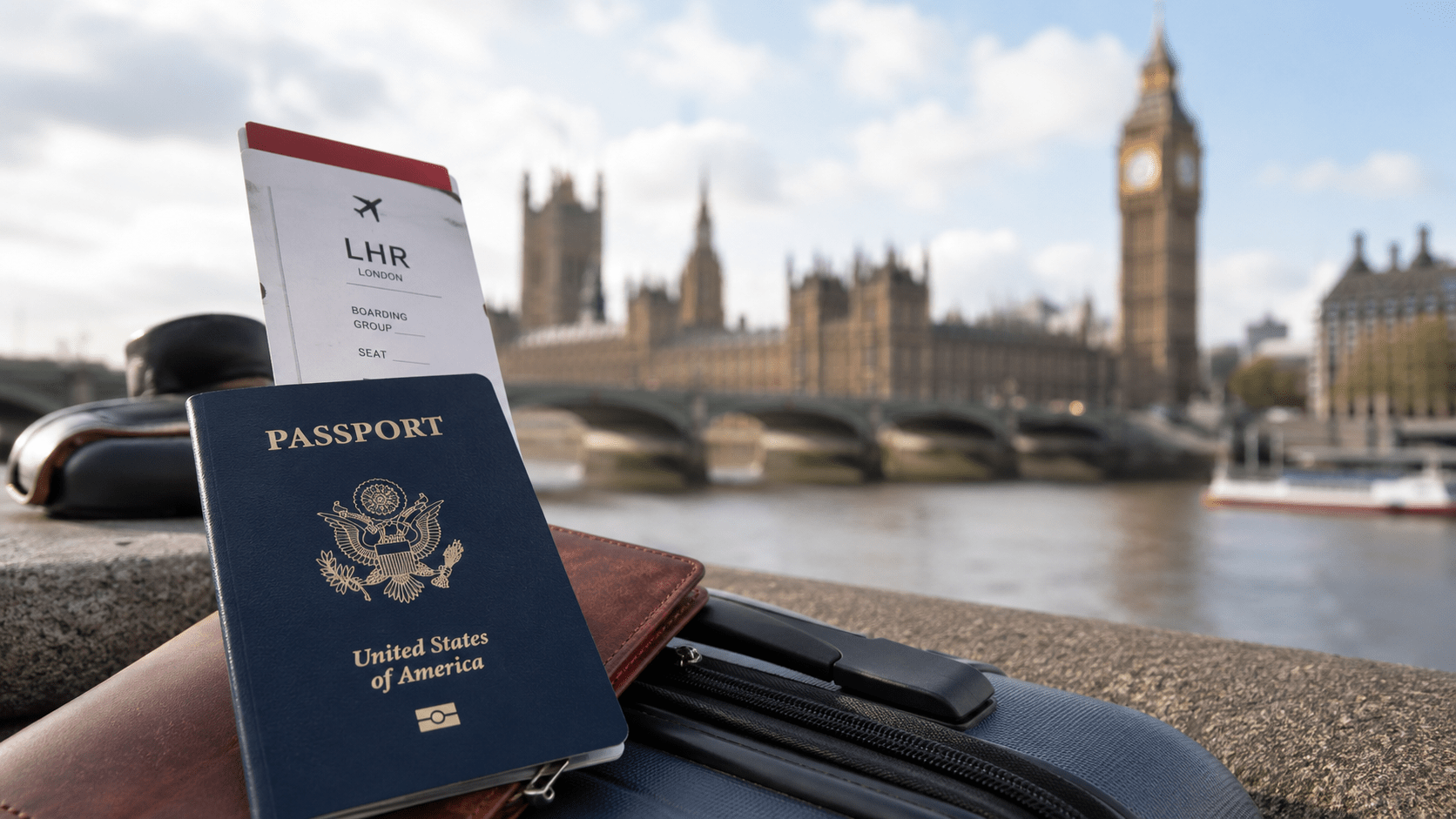


ETIAS for U.S. citizens 2026 is one of the most important Europe travel rule updates for Americans planning late-2026 and 2027 trips.

Last updated: September 2026 Written by: Desmo Travel Editorial Team Reviewed for travel planning accuracy by: Desmo Travel Vacation Planning Team
If you are a U.S. citizen planning a Europe trip in late 2026 or 2027, there is one travel rule you should know before you book flights: ETIAS is coming.
ETIAS stands for European Travel Information and Authorisation System. It is not a visa. It is a digital travel authorization for visitors who can normally travel to the Schengen Area without applying for a visa first. For American travelers, that means Europe will still be easy to visit, but there may be one extra online step before boarding.
The confusing part is timing. For years, travelers heard that ETIAS was “starting soon.” Dates moved. Articles became outdated. Some websites still mention old fees or old launch windows. So let’s keep this simple and useful.
As of September 2026, ETIAS is scheduled to start in the last quarter of 2026. The European Union has said the exact date will be announced before launch. Until ETIAS officially starts, U.S. citizens do not need to apply for it.
That does not mean you should ignore it. If you are planning a Christmas market trip, winter Europe vacation, Mediterranean cruise, honeymoon, family visit, or spring 2027 Europe tour, this is worth checking before you pay for nonrefundable plans.
ETIAS for U.S. Citizens 2026: Quick Answer
Not yet for most trips before the official launch date. ETIAS is scheduled to begin in the last quarter of 2026, but the exact start date must be confirmed by the European Union.
Once ETIAS starts, U.S. passport holders traveling visa-free to participating European countries will generally need an approved ETIAS travel authorization before travel.
ETIAS is expected to apply to short stays, usually up to 90 days within a 180-day period, for purposes such as tourism, family visits, business trips, short study, and transit through participating countries.
Think of ETIAS as a pre-travel permission check. It is linked to your passport. Airlines and other carriers may verify it before allowing you to board.
What Is ETIAS?
ETIAS is Europe’s new digital authorization system for travelers from visa-exempt countries. U.S. citizens are part of that group.
Today, many Americans can fly to countries such as France, Italy, Spain, Greece, Germany, Switzerland, Portugal, the Netherlands, and other Schengen destinations with only a valid passport for short tourist stays. ETIAS adds a digital screening step before the trip.
It does not replace your passport. It does not guarantee entry. Border officers can still ask questions when you arrive. But after launch, traveling without a required ETIAS could cause problems before you even reach Europe, because carriers may check authorization before boarding.
ETIAS Start Date in 2026
The official ETIAS website says ETIAS will start operations in the last quarter of 2026. The European Union has also said the exact date will be communicated before the system goes live.
For travelers, the safest way to plan is this:
- If your Europe trip is before ETIAS officially starts, do not pay random third-party websites claiming you must apply now.
- If your Europe trip is in late 2026, check the official ETIAS website again before final payment.
- If your Europe trip is in 2027, assume ETIAS may be part of your pre-trip checklist unless official guidance says otherwise.
This is especially important for families, group tours, cruises, and multi-country Europe vacations. One missing authorization can delay the whole trip.
ETIAS Cost in 2026
The ETIAS fee is listed as 20 euros.
Some travelers may be exempt from paying the fee, including applicants under 18 or over 70. Even if a fee exemption applies, the traveler may still need an approved ETIAS once the system starts.
For families, this matters. A family of four should not assume one parent’s authorization covers everyone. Each traveler needs their own authorization linked to their own passport.
How Long Will ETIAS Be Valid?
ETIAS is expected to be valid for three years or until the passport used in the application expires, whichever comes first.
That last part is where people get caught. If you get ETIAS with a passport that expires next year, your ETIAS does not magically transfer to a new passport. It is tied to the passport details used when you apply.
Desmo Travel tip: if your passport is close to expiring, renew the passport first and apply for ETIAS after the new passport arrives.
Which European Countries Will Require ETIAS?
ETIAS is for visa-exempt travelers visiting participating European countries. This includes many popular Europe destinations for U.S. travelers, such as:
- France
- Italy
- Spain
- Greece
- Germany
- Portugal
- Netherlands
- Switzerland
- Austria
- Belgium
- Croatia
- Czech Republic
- Denmark
- Finland
- Hungary
- Iceland
- Malta
- Norway
- Poland
- Sweden
The country list can change and travelers should confirm the official list before departure, especially if the trip includes smaller countries, islands, cruises, or multiple border crossings.
ETIAS vs EES: What Is the Difference?
This is the part travelers mix up the most.
ETIAS is something you apply for before travel, once the system starts. It is a travel authorization for visa-exempt travelers.
EES, the Entry/Exit System, is different. EES is a border system that records the entry and exit of non-EU travelers visiting for a short stay. It uses passport and biometric information at the border. You do not apply for EES before the trip the way you apply for ETIAS.
Simple version:
- ETIAS happens before travel.
- EES happens at the border.
- ETIAS is a travel authorization.
- EES is an entry and exit record system.
- ETIAS may involve an online application and fee.
- EES may involve fingerprints, facial image, and passport scanning at the border.
If you are comparing new entry rules, Desmo Travel also has a 2026 travel rules guide. If you are traveling to Europe after both systems are active, you may deal with both: ETIAS before boarding and EES when entering or leaving the participating country.
What U.S. Travelers Should Prepare Before Applying
Once ETIAS opens, most travelers should have these ready:
- Valid U.S. passport
- Email address
- Payment card
- Personal details
- Travel document details
- Basic trip information
- Answers to eligibility and security questions, if required
Your passport matters most. The official ETIAS guidance says the travel document should generally not expire in less than three months and should not be older than 10 years. Airlines and countries may also apply their own document checks, so do not travel close to the edge if you can avoid it.
For international travel, a six-month passport cushion is often the cleaner planning choice, even when a country’s minimum requirement is different.
Common ETIAS Mistakes to Avoid
The first mistake is applying too early through unofficial websites. If ETIAS has not launched, there is nothing useful to approve yet. Watch for lookalike websites and extra fees.
The second mistake is using the wrong passport. If you have dual citizenship or more than one passport, the passport used for ETIAS should match the passport you use to travel.
The third mistake is forgetting children. Every traveler needs their own authorization when ETIAS applies, including babies and minors.
The fourth mistake is renewing your passport after approval and assuming the old authorization still works. ETIAS is linked to the passport used in the application.
The fifth mistake is confusing ETIAS with a visa. ETIAS is not a Schengen visa. If your nationality, travel purpose, or length of stay requires a visa, ETIAS does not replace that visa.
The sixth mistake is treating approval as guaranteed entry. Border officers can still ask for proof of return ticket, accommodation, funds, travel purpose, and other normal entry details.
Who May Not Need ETIAS?
You may not need ETIAS if you are traveling with a passport from a participating European country, if you already need a visa instead, or if your status falls under an official exemption.
This can get personal very quickly. A U.S. resident with an Indian passport, for example, may have a different requirement than a U.S. citizen with a U.S. passport. A dual citizen may need to choose the correct passport for the trip. A student, worker, long-stay visitor, or person joining family may need something more than ETIAS.
When in doubt, check the rules by nationality, passport, destination, and travel purpose.
Planning a Europe Trip Around ETIAS
If your trip is a simple one-week vacation to Italy or France, ETIAS may only become a small pre-trip task. Apply, save the confirmation, make sure your passport matches, and continue planning.
For more complex trips, take a little more care.
Cruises can be tricky because itineraries may touch several countries. A traveler may board in one country, stop in another, and disembark somewhere else. Ask the cruise line what documents are checked before boarding and at each port.
Group tours need a shared document checklist. One traveler missing authorization can create stress for the whole group.
Family trips should check every passport early. Children’s passports expire faster than adult passports, and parents sometimes notice too late.
Honeymooners should be careful with name changes. If your passport, ticket, and travel authorization do not match, the trip can become much less romantic very quickly.
Business travelers should confirm whether the planned activity is allowed under visa-free travel. Meetings and conferences may be fine in many cases, but work, employment, paid activity, or long stays may need a different permission.
Desmo Travel Checklist for U.S. Citizens Visiting Europe
Use this before booking and again before departure:
- Check your passport expiration date.
- Confirm your destination countries.
- Confirm whether ETIAS has officially launched.
- Apply only through the official ETIAS website or official app once available.
- Make sure the passport number on ETIAS matches your travel passport.
- Save digital and printed copies of confirmations.
- Check airline and cruise line document requirements.
- Carry return or onward travel details.
- Keep hotel, tour, or family-stay details handy.
- Buy travel insurance if required or strongly recommended for your trip.
- Leave extra airport time while EES and ETIAS procedures are still new.
Can Desmo Travel Help?
Yes. Desmo Travel can help you plan the travel side around document requirements, including flights, Europe packages, cruises, travel insurance, and pre-trip checklists.
For government applications, official rules always come first. We can help you understand what to check, where to verify it, and how to avoid common timing mistakes before you book.
Already visiting the UK too? Read our UK ETA for U.S. citizens 2026 guide before you finalize the route.
Planning Europe in late 2026 or 2027? Contact Desmo Travel before final payment so your flights, itinerary, passport timing, and travel documents are working together.
FAQs About ETIAS for U.S. Citizens in 2026
Do U.S. citizens need ETIAS right now?
As of September 2026, ETIAS has not officially started yet. It is scheduled to start in the last quarter of 2026. Check the official ETIAS website before traveling.
Is ETIAS a visa?
No. ETIAS is not a visa. It is a digital travel authorization for visa-exempt travelers.
How much does ETIAS cost?
The ETIAS fee is listed as 20 euros. Some travelers, such as applicants under 18 or over 70, may be exempt from the fee.
How long is ETIAS valid?
ETIAS is expected to be valid for three years or until the passport used in the application expires, whichever comes first.
Does ETIAS guarantee entry into Europe?
No. ETIAS is permission to travel, not a guaranteed right of entry. Border officers can still make the final entry decision.
What happens if I renew my passport after getting ETIAS?
You may need a new ETIAS because the authorization is linked to the passport used in the application.
Do children need ETIAS?
Once ETIAS applies, each traveler generally needs their own authorization, including children and infants.
What is the difference between ETIAS and EES?
ETIAS is a pre-travel authorization. EES is a border entry and exit recording system. You apply for ETIAS before travel; EES happens at the border.
Where should I apply for ETIAS?
Apply only through the official ETIAS website or official mobile app once the system is live. Be careful with lookalike websites and unnecessary extra fees.
Disclaimer
This article is for general travel planning information only. It is not legal, immigration, visa, or government advice. ETIAS, EES, passport validity rules, airline boarding procedures, fees, exemptions, country lists, and launch timelines can change without notice. Always verify requirements with the official ETIAS website, the European Union, the U.S. Department of State, your airline, your cruise line if applicable, and the relevant embassy or consulate before booking or traveling. Desmo Travel is not responsible for denied boarding, denied entry, delays, cancellations, financial loss, or travel disruption caused by reliance on outdated, incomplete, or third-party information.